
St. Paul’s Church-Yard, London, Middlesex • 30th of January, 1797, a Monday morning, shortly before 10 o’clock
Reader, to acquaint you with the Reason why I stand on the Steps of London’s great Cathedral today, allow me to shew you the Letter I sent my Client by first Post Friday last.
Friday, 27th of January 1797
Dear —,
I trust this Letter finds you in good Health. Its Purpose is to inform you of a Change of Itinerary for next Week—from the 30th inst.—on account of News of your Relative, Mr. John Greensword.
New Intelligence proves that he was not a Tin-Plate Worker when his son, Joseph, was baptised; moreover, it reveals the actual Work in which he was engaged at this time!
As a consequence, I have cancelled our Passage on Monday’s Mail to Portsmouth to see Mr. & Mrs. E. N. Greensword.
I respectfully request your Attendance at 10 o’clock on Monday morning in front of St. Paul’s Cathedral, from whence I will conduct a Tour of the Church-Yard where your Ancestor lived and worked. I trust you are as thrilled by this Prospect as I by my Discovery!
Please confirm Receipt by last Post this Afternoon.
Your most humble and obedient Servant, &c. &c.,
_______ .
P.S. Please wear warm Cloathes
Reader, I admit the Grounds I give for the Change to our Itinerary are hardly compelling. I thought to describe the Rationale for my Decision in some Detail, but very soon realised that to mount a persuasive Argument would consume numerous Sheets of expensive Writing Paper.
I shall therefore reveal my Discovery once my Companion arrives. I will provide a full Account of the Measures I took to substantiate the relevant Facts when we take a Refreshment at the Conclusion of our Tour. Why, I do believe I recognise that Person trudging out of Ludgate-St.
Here is a Map, Reader. Take your bearings and I shall greet my Client.

Figure 18. St. Paul’s Church-Yard, in the “Plan of Castle Baynard and Farringdon-Within Wards”, Mr. John Noorthouck, Book II, A New History of London Including Westminster and Southwark, to which is added, A General Survey of the Whole; Describing the Public Buildings, Late Improvements, &c. Illustrated with Copper-Plates, London, 1773, pp. 579–587.
§
Welcome! I must tell you, I have awaited your Arrival with great Anticipation, for I have exciting News to convey! The Catalyst for the change to our Itinerary is an Announcement published in The Whitehall Evening Post; Or London Intelligencer. I shall not keep you in Suspense!
It reads—:
DEAD: On Wednesday night died Mr. Greensword, Master of St. Paul’s Coffee-House in St. Paul’s Church-Yard.[1]
As the result of the many clever Searches conducted on your behalf, I am able to confirm that the Deceased was your Ancestor and, moreover, I have located the precise Location of his Coffee-House.[2]
Come! Let us commence our Perambulation.
We shall walk first along the North-Side of the Cathedral, viz. in the opposite Direction to our Destination. The Distance is of no consequence—unless we are detained by Curiosity in one or other of the Institutions and Shoppes along the way—the number of Houses in the Church-Yd. being 79.
What’s that, my Friend? Ah, but this is no ordinary church-yard! Its Residents are far more animated than they who rest in the church-yard of St. Andrews’s, the 79-Buildings to which I refer being those that line the perimeter of the Yard around the Cathedral.
Now, should you surmise the aforementioned Premises to be Resorts of the Clergy, you would not be mistaken. Indeed, some of Mr. Greensword’s immediate Neighbours and Customers were Clerics. However, you would be wrong to assume the Edifices surrounding the Cathedral are confined to ecclesiastical Institutions and Schools.
On the contrary, St. Paul’s Church-Yd. is famed for its Purveyors of Instruments of Music; Publishers of Musical-Compositions; Sellers of Books; Printers of Pamphlets; & the Inns, Taverns & Coffee-Houses that provide a convivial meeting places to assorted Clubs and Societies.
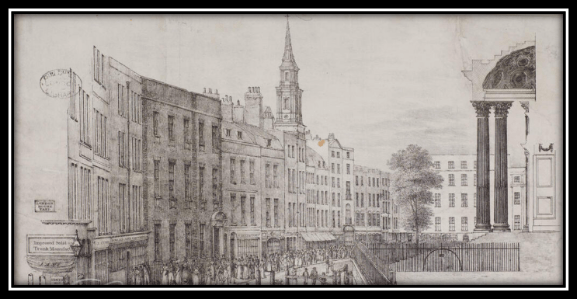
Figure 19. “North Side of St. Paul’s Church-Yard”, Drawn and Etched by Mr. Thomas Horner, Etching, 16 in. x 10in., c. 1822, London Metropolitan Archives, Collage Record no. 5834.
Here is the Sign of the Violin, Hautboy & German Flute at non. 75, which was Mr. Peter Thompson’s shoppe when your Ancestor lived in the Church-yd.[3] He made, mended and sold musical Instruments, stocked replacement Reeds, Strings & Spinnet-wire and books of Instruction.
The lane to your left is London House-yd. Were we to walk into this Yard, we would see the Goose and Gridiron Coach-Office and Ale-House, the Latter being where the Freemasons met, likely when your Ancestor lived near-by.
I have no doubt that no. 65, not far ahead, held a place of considerable Significance in the life of your Relatives. It seems unlikely that Mr. Greensword’s young son, Joseph, was unacquainted with the Proprietor of the Premises and his Stock.
My fellow Perambulator, I refer to The Bible and the Sun Bookshop! It opened its doors in 1745; its Proprietor was Mr. John Newbery, one of the very first Publishers of Books for Children.
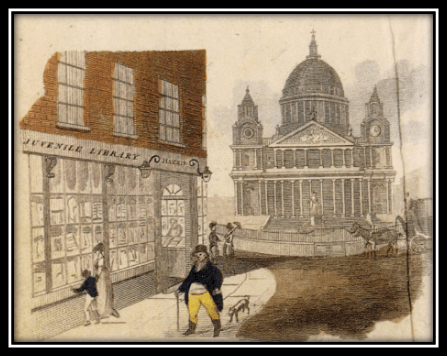
Figure 20. Harris’s Juvenile Library, St. Paul’s Church-Yd., formerly the Bible and the Sun Bookshop, The Cries of London, 1804
I daresay our Protagonist’s son, being an uncommonly intelligent Child and a Neighbour of the Book-Seller, had access to the Stories, Primers, A.B.C.s, &c., Mr. Newbery sold, including A Little Pretty Pocket Book. Ten Editions were printed between 1744 and 1760; intended to Teach and Entertain, each Book came with a Ball for Boys & Pincushion for Girls.[4] Shall we enter? No? As you wish.
However, I must say a Tom Telescope Story would surely have appealed to a Scientifickly-minded young Fellow like the Coffee-House Master’s son. Perhaps The Newtonian System of Philosophy Adapted to the Capacities of Young Gentlemen and Ladies?[5] Joseph was 11-years-old when the Book was first published. Whether he still lived in the Parish, I know not.
We have already passed no. 62., but the Shoppe founded by Mr. Chas. Rivington also has sound literary Credentials, for it was there that Mr. Richardson’s masterpiece, Pamela or Virtue Rewarded, &c.&c. was published in 1741. I regret to tell you, Mr. Rivington is deceased, but his Premises are maintained by his Sons.
Next is St. Paul’s School, situated between no. 41 & 42. I have already perused its Archive of Admissions, but I have not found any of your Relations enrolled therein.
As to the South-Side of the Church-yd., Publishers and Printers of Books are numerous here, too.
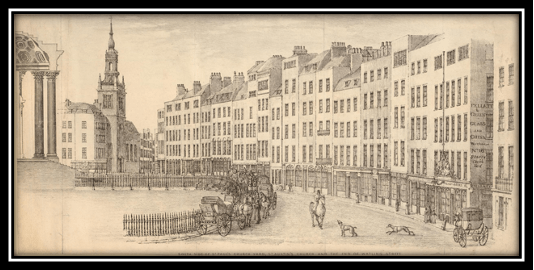
Figure 21. South Side of St Paul’s Church Yard, St Austin’s Church, and the end of Watling Street, Drawn and Etched by Thomas Horner, 1820, Lithograph, 9 in. x 18 ½ in., The British Museum.
Even your Ancestor’s Coffee-House has a long Connexion with Literature of all types, viz. as a Venue for the Auction of Books, Manuscripts & entire personal Libraries.
In 1748, just 2-years before Mr. Greensword took charge, the Rev. Mr. John Lewis’s Manuscripts were sold at St. Paul’s Coffee-House. Mr. Lewis, 40-years Vicar of Thanet, Kent, was “an eminent Divine and Antiquary”.[6] Perhaps you are familiar with his works on English Translations of the Bible? Caxton, then? Wycliffe? English Seals? I must nevertheless commend to you his History of the Isle of Thanet, and History of Feversham Abbey, since you have Relatives in Kent..[7]
We have almost come to the Western reach of the South-Side of St. Paul’s Cathedral. See the Sign of the Queen’s Arms ahead?
This Tavern was kept by the Widow Reddall when Mr. Greensword was Master of his Coffee-House. She had several sons in the East India Service; another was the Rev. Mr. Dixon Reddall, St. John’s College, Cambridge, was Rector of Simpson, Bucks.[8] The great Thespian, Mr. David Garrick, and also Mr. Samuel Johnson, had their Clubs at the Queen’s Arms, which stands next door to your Ancestor’s Coffee-House!
Mr. Greensword’s neighbours to the West were Men of the Cloth, being the Rev. Messrs. Rayner, Hillman, Cook, Lloyd, & the Minor Canon Tithes, successively. Rev. Mr. Rayner baptised both Joseph Greensword and his baby brother, Nathanael.

Figure 22. “View of the Doctors’ Commons entrance from St. Paul’s Churchyard”, Mr. John King, Pen & Wash on Paper, 12” x 10”, c. 1800, London Metropolitan Archives, Collage Record No. 1752.
Between St. Paul’s Coffee-House and the Residences of the aforementioned Clerics is the Entrance to Doctors’ Commons, but we shall not explore beyond the Archway today, for we have reached our Destination.
Let us go inside and take a cup of Coffee. I have News for you about what became of Mr. John Greensword’s family following his death.
[1] The Whitehall Evening Post; Or London Intelligencer, Thurs. 8th to Sat. 10th of January, 1756, No. 1542, p. 1.
[2] As to the precise Situation of St. Paul’s Coffee-House, Reader, this is necessarily of utmost Import to me as a Family Topographer. The Records pertaining to Mr. John Greensword for the period commencing with the Christening of his son, Joseph, and concluding with his own Decease, put his commercial Interests in the West Precinct and his spiritual Investments in the Parish of St. Gregorye by St. Paul. I perforce consulted my topographical Advisors as to the exact Location of St. Paul’s Coffee-House. Mr. Shelley placed it “under the shadow of the cathedral of that name”. His Directions, although Picturesque, were unnecessarily reliant on Sunshine. Mr. Thornbury told me the Coffee-House stood “at the corner of the Archway of Doctors’ Commons, on the site of ‘Paul’s Brew House’ and the ‘Paul’s Head’ tavern”. Naturally, the historical Context was appreciated, but even these Directions did not suffice. Doctors’ Commons was not the name of a public Thoroughfare, but a Precinct of Courts of Canonical, Civil, Marital, Naval & Probate Law with a Hall, Library and Accommodations. Once I had pointed this out, Mr. Thornbury supplied additional Information. St. Paul’s Coffee-House stood on the Corner of the Dean’s-Ct. However, it was Mr. Lockie—ever the Paragon of Accuracy & Brevity, if not Poesy & History—who was most helpful. He says that Dean’s-Ct., St. Paul’s Church-Yd., is to be found at “no. 5, S. side, being the first on the Right from Ludgate-st., leading to 26, Great Carter-lane”. As to the vast Yard around the Church, “the numbers begin and end at Ludgate-st.”
[3] Should the Reader be unfamiliar with their Musical Instruments, a Hautboy is a woodwind Instrument somewhat like an Oboe.
[4] A Little Pretty POCKET-BOOK, Intended for the Instruction and Amusement of Little Master TOMMY and Pretty Miss POLLY. With two Letters from Jack the Giant-Killer; as also A BALL and PINCUSHION; the use of which will infallibly make Tommy a good boy and Polly a good girl. To which is added, a little SONG-BOOK, being A New Attempt to Teach Children the Uses of the English Alphabet, by Way of Diversion. 10th Edition.London, printed for Mr. J. NEWBERY, [No. 65, North Side] of St. Paul’s Church-Yard, 1760. Price Six-pence, bound.
[5] The Newtonian System of PHILOSOPHY Adapted to the Capacities of Young GENTLEMEN and LADIES, and familiarized and made entertaining by Objects with which they are intimately acquainted: BEING the Substance of SIX LECTURES read to the LILLIPUTIAN SOCIETY, by TOM TELESCOPE, A.M. And collected and methodized for the Benefit of the Youth of these Kingdoms, by their old Friend MR. NEWBERY, in St. Paul’s Church Yard, Who has also added Variety of Copper-Plate Cuts, to illustrate and confirm the Doctrines advanced, &c. London, Printed for J. Newbery, at the BIBLE and SUN in St. Paul’s Church Yard, 1761.
[6] Mr. Joseph Ames, Typographical Antiquities of Great Britain; Or The History of Printing in England,Scotland and Ireland, Containing Memoirs of Our Ancient Printers, and a Register of the Books Printed by Them, Considerably Augmented by William Herbert, of Chestnut, Herts, and now Greatly Enlarged with Copious Notes, and Illustrated with appropriate Engravings; Comprehending the History of English Literature, and a View of the Progress of the Art of Engraving, in Great Britain, by the Rev. Thomas Frognall Dibdin. London: Printed for Mr. William Miller, Albemarle Street by Mr. William Savage, Bedford Bury, 1810, p. 30.
[7] Ibid. p. 31.
[8] Appendix to Admissions to the College of St. John the Evangelist in the University of Cambridge, Volume 3, by St. John’s College, University of Cambridge, p. 609.
 A FAMILY TOPOGRAPHY